 Exploring
For off-grid, the MRCOOL Easy Pro DIY is the best mini-split — you can install it yourself with pre-charged lines, and it heats and cools efficiently. For the most cooling per dollar, the 12,000 BTU 20 SEER2 unit wins. To condition two rooms, the Cooper & Hunter dual-zone is the pick.
How We Picked
For off-grid cooling, efficiency is everything — every watt comes from your battery bank — so we prioritized high SEER2 ratings, heat-pump capability (cool in summer, heat in shoulder seasons), and install practicality. We chose a true DIY unit, a high-efficiency value pick, and a dual-zone system for larger spaces. To power one, size your array and inverter using our solar inverter and off-grid system guides.
1. Best DIY (Off-Grid): MRCOOL Easy Pro 12K
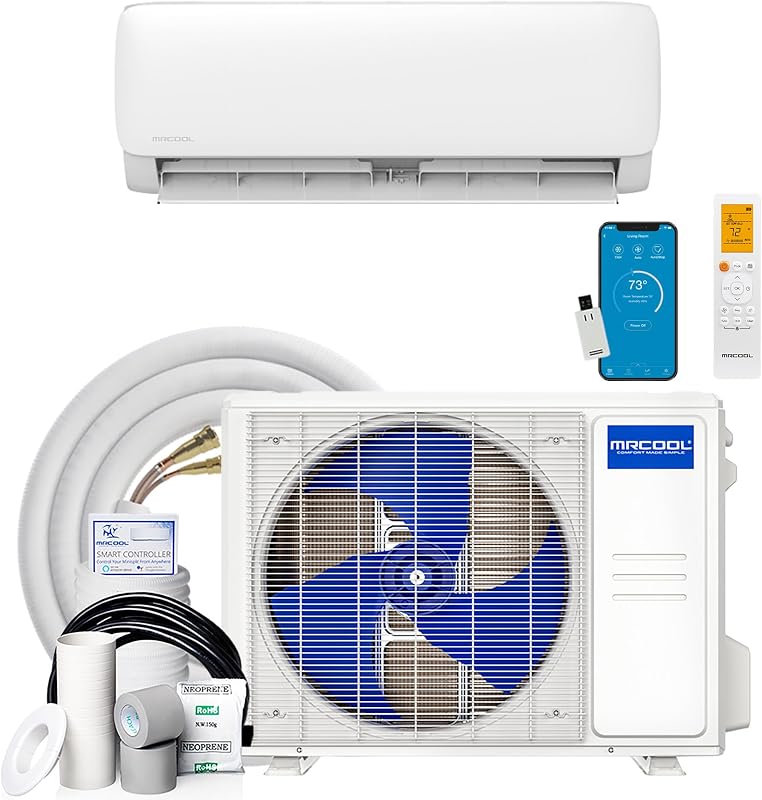
MRCOOL Easy Pro 12K BTU DIY
MRCOOL
- 12,000 BTU, 19.5 SEER2 ductless heat pump (heats & cools)
- DIY install — pre-charged 16 ft line set, no vacuum pump needed
- No HVAC tech required for a basic single-zone install
- Efficient inverter compressor sips power for off-grid use
Why we picked it: MRCOOL's DIY line is the reason mini-splits took off with off-gridders — the pre-charged, quick-connect line set lets a handy owner install it in an afternoon without a refrigerant license or vacuum pump. As a heat pump it both cools and heats efficiently, and the inverter compressor keeps power draw low for solar systems. Best for cabins and DIY installs.
2. Best Value: 12,000 BTU 20 SEER2

12,000 BTU 20 SEER2 Mini-Split
Ductless Mini-Split
- 12,000 BTU at a high 20 SEER2 efficiency
- Cools and heats up to ~750 sq ft
- Modern R32 refrigerant; WiFi smart control
- Includes installation kit (lines, brackets, fittings)
Why we picked it: A 20 SEER2 rating at this price is excellent value, and the 750 sq ft coverage handles a whole small cabin from one head. The newer R32 refrigerant runs efficiently, and WiFi control lets you pre-cool before you arrive. It's not a no-vacuum DIY unit, so budget for a flare/vacuum or a pro. Best for buyers chasing efficiency per dollar.
3. Best Multi-Zone: Cooper & Hunter Dual 2-Zone

Cooper & Hunter 18,000 BTU Dual 2-Zone
Cooper & Hunter
- 18,000 BTU outdoor unit with two 12K wall heads
- 22.5 SEER; condition two rooms independently
- Heat-pump heating down to ambient -13°F
- Includes 25 ft pre-flared, insulated line-set kits
Why we picked it: When one head can't reach the whole place, this Cooper & Hunter runs two independent zones from a single outdoor unit — ideal for a cabin with a bedroom plus living area. The 22.5 SEER efficiency and -13°F heat-pump rating make it a true four-season pick, though it needs professional installation. Best for two-room or larger off-grid homes.
Comparison Table
| Pick | Unit | BTU | Efficiency | Best for |
|---|---|---|---|---|
| Best DIY | MRCOOL Easy Pro | 12,000 | 19.5 SEER2 | Self-install off-grid |
| Best Value | 12K 20 SEER2 | 12,000 | 20 SEER2 | Efficiency per dollar |
| Best Multi-Zone | Cooper & Hunter Dual | 18,000 (2×9–12K) | 22.5 SEER | Two-room cabins |
What to Look For
Efficiency (SEER2). Higher means less power per BTU — critical off-grid. Aim for 19+ SEER2.
DIY vs pro install. Pre-charged DIY units (MRCOOL) skip the vacuum pump; traditional units need a tech to flare lines and pull a vacuum.
Voltage and inverter. 115V single-zone units run on a large pure sine inverter; 230V units need a 240V split-phase inverter.
Heat-pump range. If you want winter heat too, check the low-temperature heating rating.
Bottom Line: Which Should You Buy?
For off-grid DIY: the MRCOOL Easy Pro — install it yourself.
For value: the 12K 20 SEER2.
For two rooms: the Cooper & Hunter dual-zone.
Made up your mind?
Each pick opens on Amazon, where the current price and stock are listed.
Frequently Asked Questions
What is the best mini-split air conditioner in 2026?
The MRCOOL Easy Pro is our best overall pick for 2026. 12K 20 SEER2 and Cooper & Hunter cover the other cases this guide compares. See the comparison table below for specifications and owner feedback, then choose the one that matches your setup.
Can a mini-split run on solar / off-grid?
Yes. A 12,000 BTU heat-pump mini-split draws roughly 700–1,200W running — far less than a window unit. With a sized solar array, a few kWh of battery, and a pure sine (or split-phase) inverter, you can cool a cabin off-grid. Run during peak sun and let thermal mass coast.
What does SEER2 mean?
It's the updated efficiency rating — higher is better. A 19–22 SEER2 mini-split uses far less power than a 10–12 SEER window unit, which is why they're ideal off-grid.
Can I install a mini-split myself?
DIY units like MRCOOL ship pre-charged with quick-connect lines, so a handy owner can install one without a vacuum pump or license. Traditional multi-zone systems need professional installation.
What size mini-split do I need?
About 20–30 BTU per square foot. A 12,000 BTU unit suits a room or small cabin (~500–750 sq ft); 18,000 BTU covers larger or multiple rooms. Insulation and shade reduce what you need.
Do mini-splits heat too?
Most are heat pumps, so yes — efficient heating down to cold temps (the Cooper & Hunter works to -13°F). A single unit can cool in summer and heat in the shoulder seasons.
Keep reading


How this guide was put together
We shortlist from manufacturer spec sheets and published efficiency ratings, confirm each listing is live on Amazon, and give owner reports from months of use more weight than first-week impressions. SEER ratings and install requirements vary by listing — confirm the current specs before buying.
Off-grid tip: Match the unit's voltage to your inverter (115V vs 230V split-phase), and confirm your battery bank can carry the compressor's running and start-up draw. Cooling during peak solar saves the battery for the evening.